
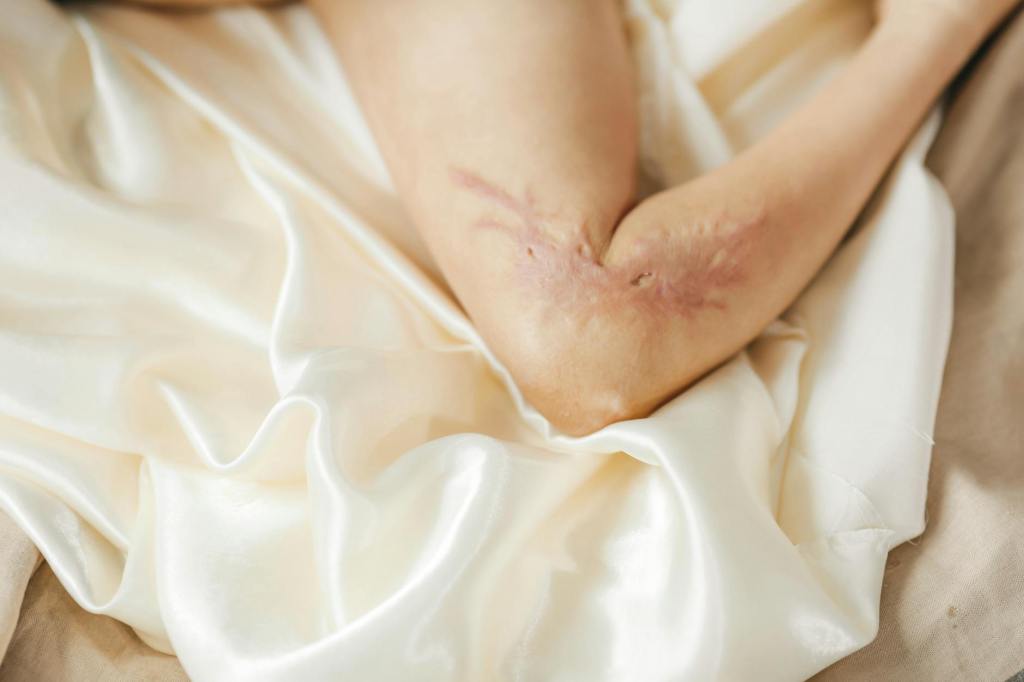
Why Scar Management Matters After Surgery or Injury
Whether following surgery, trauma, or a significant injury, scarring is a natural part of the body’s healing process. But while scar provides strength during the process of recovery, beneath the surface it can impact more than just the skin. Visible scars can negatively affect one’s self-perception or function as a constant reminder.
Occupational therapists, especially those trained in hand therapy and lymphedema management understand that scar tissue can affect movement, sensation, and even confidence. That’s why we specialize in helping clients move beyond healing to truly thrive. We use skilled manual therapy and exercsie interventions that target scar mobility, pain, and function.
Why Scar Tissue Needs Skilled Attention
Scar tissue is denser and less elastic than normal skin and fascia. As it forms, it can adhere to underlying structures such as muscle, fascia, and even nerves. These tissues and tissue layers are designed to move and glide independently of one another but scar fibers can “glue” structures to one another. Resulting tissue adhesions restrict range of motion, contribute to pain, and negatively affect limb function. Without intervention, scar may limit daily activities, especially in the upper extremities where fine motor control and full mobility are essential.
Newly formed scar tissue is designed for strength which helps to close a wound or heal an incision but if this strong tissue is not moved properly, the thick fibers can become problematic. But the body has amazing capabilities and as scar tissue matures, it can become more pliable. It is living body tissue that has capacity for change. This is where therapy helps.
Skilled therapy focused on soft tissue remobilization is key to ensuring that scar maturation supports recovery. When guided by a trained occupational therapist, this approach enhances the scar’s pliability, elongation, and integration into surrounding tissues.
A Comprehensive Scar Management Toolbox
A range of interventions need to be tailored to your individual scar presentation, comfort level, and functional goals. Common therapeutic techniques are discussed below.
Manual Therapy for Tissue Mobilization
Hands-on techniques are foundational for scar work. A skilled OT approach includes gentle stretching, myofascial release, and instrument-assisted soft tissue mobilization to reduce adhesions and restore gliding between tissue layers. Manual lymphatic drainage helps reduce inflammatory processes and draw proteins away from target areas to lessen scar formation. Manual techniques also help desensitize hypersensitive areas and stimulate circulation for better healing.
Dry Needling
When scars create deep restrictions, dry needling offers targeted relief. This technique uses thin monofilament needles to stimulate trigger points and disrupted fascial planes, helping to release internal adhesions and improve blood flow. This can be effective for deep post-surgical scarring or long-standing tissue stiffness.
Cupping Therapy
Using negative pressure, cupping lifts and separates layers of tissue, encouraging the mobility of bound-down scars. Cupping increases circulation and lymphatic flow, reduces stiffness, and promotes remodeling of collagen fibers. It’s a powerful addition to manual therapy in restoring movement and function. Cupping can be used in conjunction with muscular exertion to further enhance tissue change and mobility.
Kinesiology Taping
Elastic kinesiology tape is applied strategically to support tissue movement and offload tension around the scar. It can reduce swelling, improve posture, and help retrain body mechanics. Taping also provides a constant, gentle mobilization to the skin and fascia as you move throughout your day. The tape essentially provides a massage every time you move the skin.
Movement Is Medicine
While manual therapy lays the foundation, movement is what locks in the gains. The aim of a therapy session is to restore some flexibility to the soft tissues, but these changes will only be long-lasting when paired with customized exercise and functional activities.
Scar tissue adapts to the demands placed upon it and will remodel over time, but early movement and functional gains are important. As occupational therapists, we design exercise/movement programs in order to:
- Enhance tissue elongation and alignment
- Encourage healthy loading and movement patterns
- Improve proprioception and strength
- Support long-term scar remodeling through dynamic motion
Scar management isn’t just about aesthetics—it’s about regaining strength, comfort, and confidence in your daily life.
When to Start Scar Therapy
It’s never too early—or too late—to support scar healing. Manual lymphatic drainage can begin immediately following surgery or injury. Other, more direct scar therapy techniques begin once the incision or wound is closed. Even chronic scars can benefit from skilled intervention.
Whether you’re recovering from breast cancer surgery, orthopedic trauma, or an unexpected accident, Katherine Jackson Occupational Therapy PLLC is here to guide your healing from the inside out.
Contact us today to schedule a scar assessment and personalized therapy plan. Your body has already done the hard work of healing. Now let us help you move forward with freedom, function, and confidence.
 Flourish Recovery & Wellness