
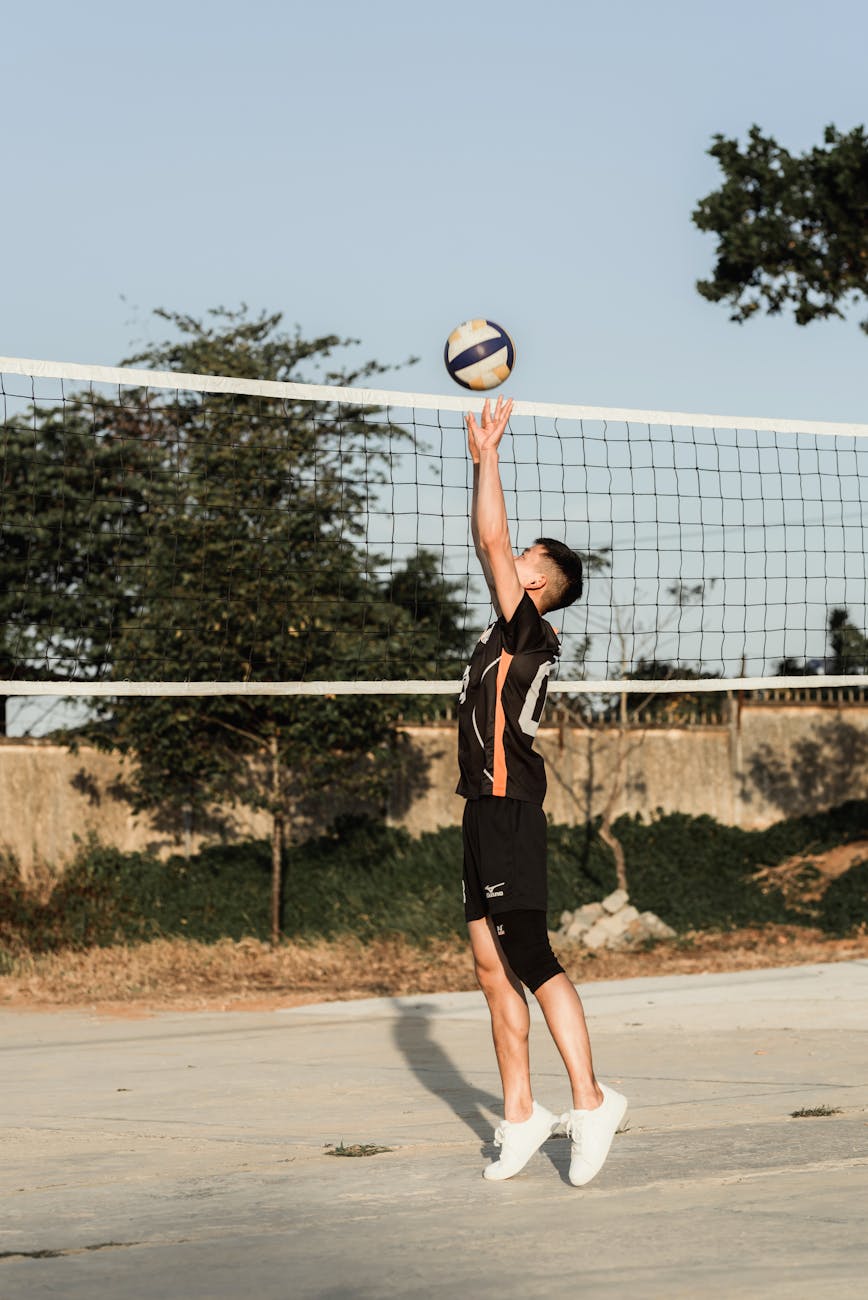
Injury Prevention for Overhead Athletes
Whether you’re serving a volleyball, throwing a baseball, spiking in pickleball, shooting hoops, or perfecting your tennis stroke, overhead athletes rely heavily on the power, stability, and coordination of the shoulder, elbow, and wrist. These joints work in harmony to generate speed, control, and accuracy during overhead movement, but when they’re overworked or poorly supported, they’re also prime targets for injury.
At Katherine Jackson Occupational Therapy, PLLC, we can help athletes protect their upper extremities while maintaining strength and performance. With the right balance of mobility, stability, and body awareness, you can stay in the game and out of pain.
The Demands of Overhead Sport
Overhead motion is powerful, but also highly complex. It requires:
- Dynamic shoulder rotation and stabilization
- Scapular control to support proper mechanics
- Coordinated movement through the elbow and wrist
- Strong core engagement and lower body drive to transfer energy upward
Repeated overhead motion, especially without proper mechanics or recovery, can lead to overuse injuries across the entire kinetic chain. These injuries tend to develop gradually—until they start interfering with your training, competition, or even daily function.
Common Injuries we treat in Overhead Athletes
Shoulder Injuries
- Rotator cuff tendonitis or tears
- Impingement syndrome (pinching of shoulder tendons during motion)
- Labral tears (especially in throwing athletes)
- Scapular dyskinesis (poor shoulder blade movement and positioning)
Elbow Injuries
- Medial epicondylitis (Golfer’s elbow) or lateral epicondylitis (Tennis elbow)
- UCL strain (ulnar collateral ligament injury in throwers)
- Elbow instability or locking from repeated forceful extension
Wrist Injuries
- Tendonitis from gripping and repeated wrist extension/flexion (especially in pitchers or racquet sport players)
- TFCC injury (triangular fibrocartilage complex tear—common in racquet and throwing sports)
- Joint instability from overuse or poor support mechanics
- Fractures from falling on an outstretched hand (FOOSH)
OT-Informed Strategies for Injury Prevention
Occupational therapy plays a key role in helping overhead athletes stay strong, mobile, and injury-free. This is especially important when training volume increases or mechanics start to break down. Here’s what we recommend:
Train Stability Before Power
Before working on speed or strength, make sure you’ve built:
- Scapular stability as a base of support for arm motion
- Rotator cuff strength to support shoulder rotation
- Core and hip stability to reduce compensatory upper body strain.
Without this foundation, the shoulder joint takes on too much of the workload. This can be especially problematic during acceleration and deceleration phases of shoulder motion, think: “Wind up and release”.
Dynamic balance challenges can reduce accidental falls. Insert cross training into your sport routine to allow for strength and stabilization to prevent accidents from falling during performance.
Protect the Elbow Through Kinetic Chain Efficiency
The elbow often takes the hit when movement is off further down the chain. Improving shoulder mechanics, trunk rotation, and postural alignment allows the elbow to function as part of a team rather than absorbing excess force on its own and working too hard.
OTs can suggest training exercises, performance schedule and pacing to reduce repetitive stress.
Balance Mobility and Strength in the Wrist
- Use eccentric strengthening for the wrist extensors and flexors to prevent tendon overload.
- Avoid gripping equipment too tightly. “Grip fatigue” can travel upstream. Trust me–I had to deal with elbow tendonitis following a sustained gripping task. No fun to recover from.
- Wrist braces or taping techniques may be appropriate for recovery phases and can be used at home with instruction.
Warm Up With Intent, Recover With Discipline
- Include dynamic warmups with shoulder circles, scapular activation, trunk rotation, and arm swings
- Post-activity, focus on foam rolling, stretching, and recovery tools to reduce tightness and inflammation
- Don’t skip rest days—tissues need time to recover, especially in high-demand sports
Know the Early Warning Signs
Pain with overhead motion, popping or catching in the shoulder, reduced throwing velocity, wrist stiffness, or elbow soreness after activity aren’t “normal soreness.” They’re signs of potential overload. Addressing them early with targeted OT intervention can prevent long-term damage.
Whether you’re in the pre-season build-up or recovering from an overuse flare-up, our goal is to help you stay active, powerful, and pain-free.
Train smarter, move stronger, and protect the joints that power your performance.
If you’re an overhead athlete living near Evanston, IL and ready to take care of your shoulder, elbow, and wrist health, reach out to Katherine Jackson Occupational Therapy, PLLC for expert guidance and support.
 Flourish Recovery & Wellness