
Safety Tips for the Perfect Jack-O-Lantern
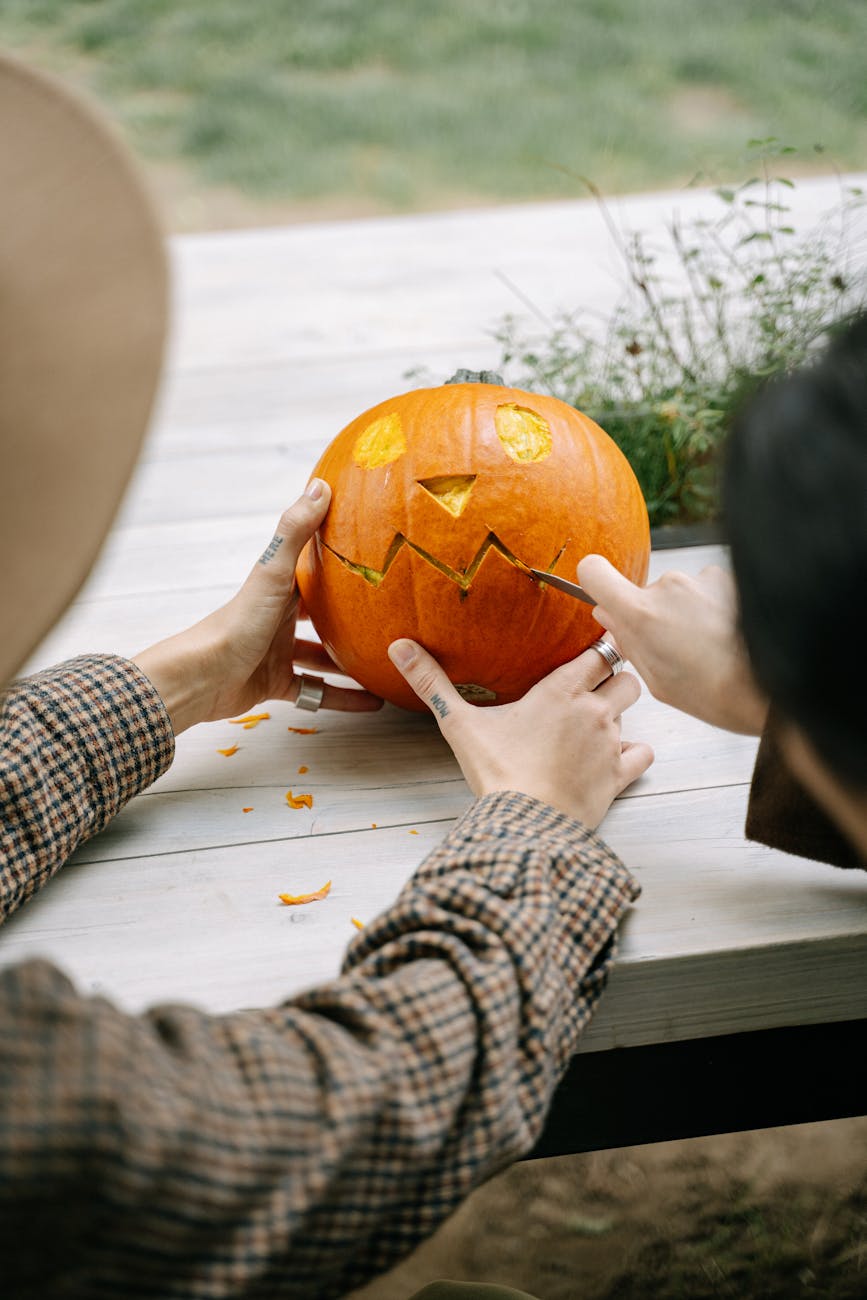
Pumpkin carving is a favorite fall tradition, but each year, it sends hundreds of people to urgent care with injuries that are all too familiar to Certified Hand Therapists (CHTs). From tendon lacerations to nerve damage and flexor injuries, these accidents can turn a fun evening into a long rehab journey. The photo attached to this post shows an accident waiting to happen!
As an Occupational Therapist and Certified Hand Therapist, I’ve treated many patients with preventable injuries. Here are simple, smart tips to help you and your family enjoy the holiday safely.
Let Adults Do the Carving
Children can participate in planning the design, scooping out seeds, and drawing the outline, but the carving itself should be left to adults. Many injuries occur when young hands attempt to handle sharp tools with poor grip, lack of coordination and/or distractibility. Kids may even enjoy drawing their designs with permanent markers, and this is an extremely safe way to decorate.
Use Pumpkin Carving Kits: NOT Kitchen Knives
If you do choose to carve your pumpkin, it is worth it to buy a kit. Specialized pumpkin carving tools are smaller, serrated, and designed to cut through pumpkin flesh without excessive force. You can use a sawing motion with a low-level of effort. Kitchen knives are too long and sharp, requiring a high-level of force to pierce the pumpkin which increases the risk of knife slip resulting in deep cuts and tendon injuries. The “safe” tools you find in carving kits are usually much better suited to the task.
Work in a Well-Lit Space
Poor lighting leads to poor visibility, and that’s a major factor in carving injuries. Lighting is lower in the fall evenings, so make sure you’re carving in a well-lit area where shadows aren’t obscuring your work. Consider carving outdoors during daylight or under bright kitchen lighting.
Use a Stable Work Surface
Avoid balancing pumpkins on your lap or on wobbly tables. Use a flat, non-slip surface at waist height to keep the pumpkin secure while carving. A damp towel underneath the pumpkin can help keep it from sliding.
Cut Away From Your Body: ALWAYS
Looking to the photo I chose for this post, the person carving the pumpkin is aiming the knife towards the index finger of the person holding the pumpkin! Clearly, the photographer was not a hand therapist. Direct the carving tool away from your hands, fingers, and body. As noted above, accidents often happen when the knife slips unexpectedly while cutting toward the hand holding the pumpkin. No one expects an accident to happen, but knife slips can cause devastating injuries and frequently bring people into my clinic.
Take Your Time
Rushing leads to mistakes. Slow, controlled movements are key to reducing force and preventing slips. If you’re feeling tired or distracted, take a break and return with better focus.
Clean and Dry Hands and Tools
Slippery hands or tools are a recipe for injury. Make sure both your hands and the tools are dry and clean to maintain a firm, safe grip. Have extra towels on hand for this messy task.
What If You Get Injured?
If a cut is deep, bleeds heavily, or affects finger movement or sensation, seek medical care immediately. Nerve and tendon injuries can worsen quickly if not treated. If you’ve had a hand injury, a Certified Hand Therapist can help you regain strength, mobility, and function. As your doctor for orders to see OT, CHT if you are having hand issues following an injury.
Enjoy Pumpkin Season Safely
Carving pumpkins is a fun way to get into the fall spirit—but safety should always come first. Protect your hands and keep the focus on creativity and family fun—not on stitches and splints.
 Flourish Recovery & Wellness