
Options and Practical Tips
For many people recovering from breast cancer surgery, a breast prosthesis can offer comfort, symmetry, and confidence during daily activities. Whether you’ve chosen not to pursue reconstruction, are in the middle of staged reconstruction, have asymmetry due to lumpectomy or radiation, or if you simply want options for certain clothing or occasions, there are many choices available. Did you know that insurance often helps cover them?
Insurance Coverage and the Women’s Health and Cancer Rights Act (1998)
Under the Women’s Health and Cancer Rights Act of 1998, most insurance plans that cover mastectomy surgery must also cover prostheses, bras, and supplies related to breast loss or reconstruction. These benefits require a prescription from your oncologist, surgical oncologist, or plastic surgeon, and many people are surprised at how generous the coverage can be. It’s worth checking your plan to understand frequency limits for bras and prostheses, as well as which vendors are in-network with your carrier.
Types of Breast Prostheses
Breast prostheses come in a wide range of styles, materials, and shapes to meet each person’s comfort and lifestyle needs:
Silicone Prostheses
Silicone prostheses are the most common type. Made from medical-grade silicone gel, they:
- Warm naturally to body temperature
- Provide a realistic weight, feel, and drape
- Come in a wide range of shapes, including custom-scanned options for the closest match
- Offer excellent symmetry, especially after a unilateral mastectomy
The natural weight of silicone also helps anchor the bra, improving stability throughout the day. I have often had clients talk about eel embarrassed when hugging a loved one, feeling that the loved one senses breast asymetry, but the silicone prosthesis has a similar feel to a natural breast.
Airport Tip:
Silicone is technically a liquid, so these prostheses often “light up” on airport body scanners. If you’re flying with your prosthesis for the first time, be prepared for the possibility of an additional physical check. You may feel on the spot when going through security and can request to be screened in a private room. Another alternative is to wear a non-silicone prosthesis when flying.
Self-Adhesive Prostheses
These adhere gently to the chest wall for improved stability and reduced movement. Some people love the secure feeling; others prefer a pocketed bra. It’s a matter of personal comfort. Though it holds in place on the chest, the prosthesis needs to be secured in place with a bra, but any bra can work. Some like not having to have a pocketed bra and others like the security of the prosthesis staying in place.
Note though, that insurance companies don’t always consider this style of prosthesis to be “medically necessary.”
Foam or Fiberfill Prostheses
Lightweight and breathable, these are often used:
- Immediately after surgery
- During recovery
- For lounging, sleeping, or comfort
- When weight is not desired
Because they are light, they may not anchor a bra as effectively and may shift more than a silicone form. If you have one native breast and wear the light weight prosthesis on the surgical side, you may not achieve a matched shape. But that’s where clothing camoflauge can come into play: scarves, jackets, button down sweaters or blouses can allow you to feel less self-conscious if symmetry is an issue. Printed fabrics also help hide physical imperfections.
Don’t read the above “tips” as instructions for how you “should” appear, my intention is to provide helpful information. As a fellow breast cancer survivor, I say: embrace yourself as a warrior. You are who you are no matter how your body looks. You do not need to cover up—your scars and your post-surgical shape are your badge of courage.
Swim Prostheses
Designed specifically for water activities, these:
- Are made of water-resistant materials
- Dry quickly
- Fit securely in swimwear
- Are ideal for pool therapy, beaches, or everyday swimming
Pro tip: these are not as pliable as silicone and are not as soft as fiberfill/foam. The filling is made of little plastic beads. How do I know this? Well, the first time I travelled with pocketed swim wear, my bag was flagged. I had put the swim prosthesis in the pocket of my new swim suit. The TSA agent was baffled, as was I about the item flagged when x-rayed. Even since that day, I would place the swim prosthesis in an easily accessible outer pocket of my travel bag.
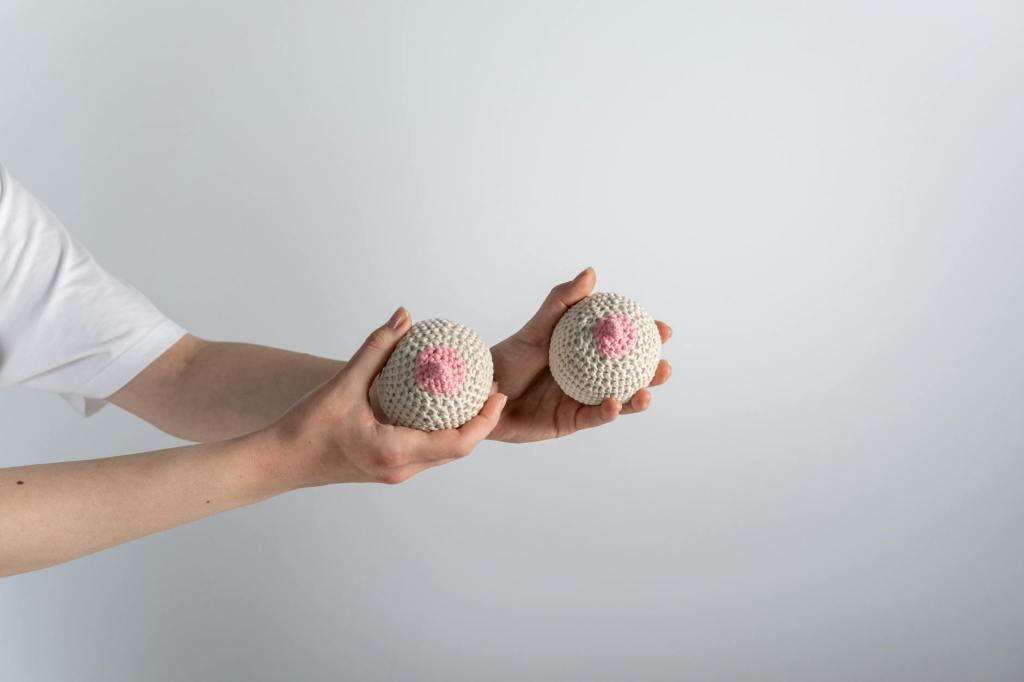
Knitted Knockers
For a soft, lightweight, low-cost alternative, Knitted Knockers are hand-knit or crocheted breast forms donated by volunteers around the world. The organization provides them free of charge, and they are:
- Soft and breathable
- Surprisingly natural in appearance under clothing
- Completely scanner-friendly at airports
- A wonderful interim or long-term option
You can learn more or request a pair at the Knitted Knockers organization’s website.
Clothing and Pocketed Garments
Many brands now offer stylish, comfortable clothing designed to hold prostheses securely:
- Pocketed bras, camisoles, tank tops, and swimwear
- Different silhouettes for work, exercise, comfort, or special occasions
- Swimwear from major retailers—Land’s End, for example, has many mastectomy-friendly swimming options
- Specialty brands such as AnaOno, Amoena, American Breast Care (ABC), and Anita offer bras, leisurewear, swimwear, and prostheses in a wide size range
It may take time (and multiple fittings) to find what feels good. This is totally normal. I remember thinking with dread about needing to find new bras, as it had taken me perhaps 20 years to find the right fit and comfort before I had breast surgery. How long will it take to find the right fit, fabric and brand? Hard to say, but comfort, symmetry, and confidence are all achievable with some trial and error. This process is best guided by a specialty fitter.
What If You’ve Chosen to Go Flat?
Going flat is an empowering and valid choice. Still, some individuals who identify as flat-proud may occasionally want to wear a bra with a lightweight or full-volume prosthesis for clothing fit, special events, or just because. Prostheses are optional tools, not obligations. Know that even if you chose to go flat, you qualify for insurance coverage of bras and prostheses.
Support During Reconstruction or Surgical Changes
If you are:
- In the tissue-expander stage
- Experiencing asymmetry
- Undergoing revision
- Recovering from implant removal (explantation)
- Waiting for a future reconstruction stage
- Feeling self-conscious about clothing fit, even after reconstruction
Mastectomy bra fitters can help. The ones I know are committed to the well-being of their clients. They can guide you toward partial prostheses, shapers, bra inserts, and strategic styles that restore balance and help you feel more like yourself. And like I have mentioned above, you may qualify for insurance coverage.
Need Breast Cancer Rehabilitation?
If you are coping with changes related to mastectomy, reconstruction, lymphedema, scar tissue, shoulder mobility, or pain, breast cancer rehabilitation can play an essential role in healing.
Katherine Jackson Occupational Therapy, PLLC provides compassionate, specialized care for people navigating breast cancer recovery. While we are not certified mastectomy fitters, we work closely with trusted vendors and professional fitters throughout the Chicagoland area and can help guide you in the right direction.
You are not alone. There are many options, and with the right support, you can find comfort, symmetry, and confidence again.
 Flourish Recovery & Wellness