
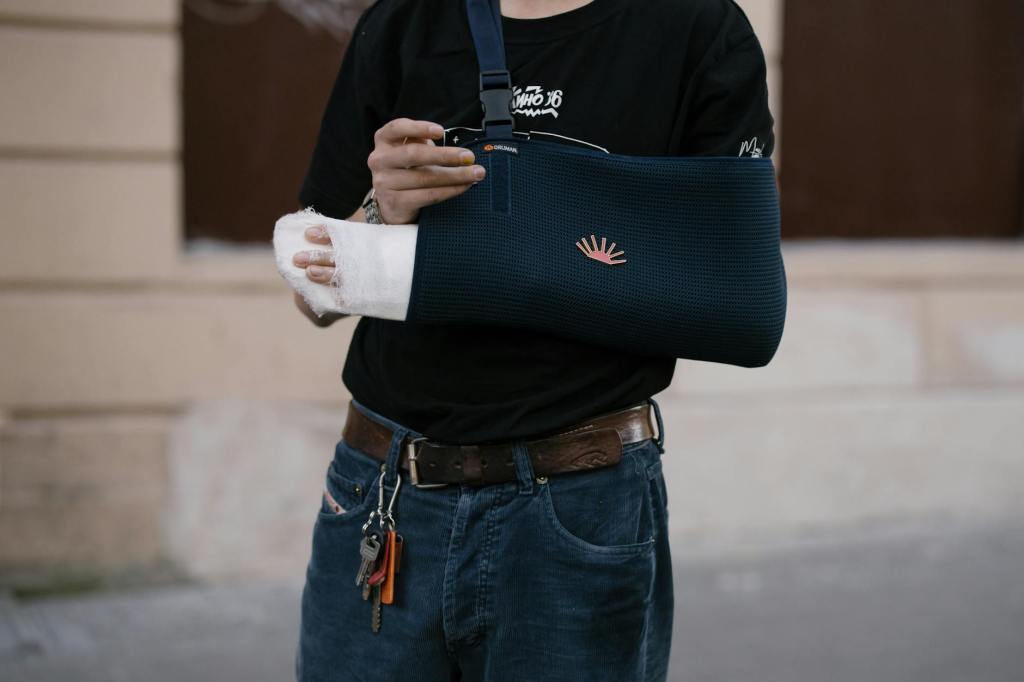
Hand therapy in Evanston, IL, offering guidance to speed your recovery
As winter weather arrives, snow and ice come into our lives and while the landscape can be beautiful, take caution when outdoors. Always wear footwear with traction.
A simple fall onto an outstretched hand, called a FOOSH injury, and certified hand therapists (CHT) see this all the time. One of the most common injuries from this type of fall is a distal radius fracture.
The radius is one of the bones that makes up the wrist and the “distal” means a break near the wrist end of the forearm bone. If you slipped on ice or tripped over an unexpected obstacle hidden in the snow, it’s important to understand what this injury means and what recovery might look like.
Types of Distal Radius Fractures: Displaced vs. Non-Displaced
Fractures of the distal radius are typically classified as either non-displaced or displaced:
Non-Displaced Fracture: The bone breaks but remains properly aligned. These are typically managed with immobilization. This usually means wearing a cast or a molded orthosis for about 4–6 weeks. Sometimes this is called a “hairline fracture”.
Depending on where the fracture is located: the end of the bone but away from the joint or impinging on the joint, the treatment plan may look different.
Displaced Fracture: The broken bone ends no longer line up correctly. These often require a manual realignment (called a “closed reduction”) followed by casting to immobilize the newly-aligned bone ends for healing.
Comminuted Fracture: If the bone broke in multiple places or if the angle of displacement is too great to allow for proper healing, surgical intervention may be suggested and is called ORIF which stands for Open Reduction Internal Fixation. The orthopedic surgeon uses a metal plate and screws are to stabilize and align the broken bone.
Because hardware is in place to stabilize the break, you will be able to move the wrist sooner following ORIF compared to casting.
Other injuries as a result of FOOSH
Tissue Sprain:When the wrist or hand is forced into an extreme position, the ligaments, which are the strong bands of tissue that stabilize joints, can be overstretched or torn. A sprain may range from mild (a few fibers stretched) to severe (a complete tear). If untreated, ligament injuries can contribute to long-term instability in the wrist.
Flare-Up of Arthritis Pain: Individuals with pre-existing arthritis in the wrist, thumb, or fingers may find that a FOOSH injury triggers a flare-up. Some people do not even know they had arthritis until the pain following the slip and fall does not subside as expected. A sudden impact can inflame already sensitive joints, leading to stiffness, swelling, and pain that lingers longer than expected. Even if no new injury occurs, the trauma can accelerate cartilage wear and worsen arthritis symptoms, sometimes requiring new management strategies after the fall.
Fractures of the Small Bones in the Wrist (e.g., Scaphoid Fracture) The wrist is a complex structure made up of eight small carpal bones, and these are vulnerable during a fall. If the large radius bone is not broken, the scaphoid, located near the base of the thumb, is the next commonly fractured bone in a FOOSH injury.
Because blood supply to the scaphoid and x-ray findings can be tricky, the fracture may not be diagnosed immediately. Ongoing achiness in the “anatomical snuff box” which is an area on the back of the hand between the base of the thumb and the wrist can signal scaphoid involvement. An MRI may been needed.
If not diagnosed and treated promptly, a scaphoid fracture can lead to chronic pain, weakness, and needs to be diagnosed properly to ensure that the healing bone has adequate blood supply. Scaphoid fractures are typically immobilized for longer than distal radius fractures.
What to Expect from Occupational Therapy
A certified hand therapist plays a critical role in your recovery, whether you were treated with casting or surgery. A CHT helps guide you on a path towards restored hand and arm function for daily activities. Once cleared by your orthopedic surgeon, therapy begins to address:
Range of Motion (ROM): After immobilization, stiffness in the wrist, fingers, and forearm is common. Gentle movements restore function and prevent long-term limitations.
Swelling and Pain Management: Persistent swelling and achiness are very common—even months after the fracture. Your therapist may use manual techniques, elevation strategies, and compression to help manage symptoms. Pain control strategies help ease your comfort while you heal.
Strengthening: Strength training doesn’t begin immediately. It typically starts 6–8 weeks post-fracture, once the bone is sufficiently healed. Overdoing it too soon can compromise your healing. A CHT can provide a home exercise program tailored to your needs and at a level of challenge that is not too strenuous to cause pain, stiffness or swelling. Your home program supports safe return to daily life activities that are important to you and necessary to complete.
Activity Resumption: A gradual return to daily tasks, work duties, sports, and recreational activities is crucial. Overuse can lead to setbacks in healing or cause compensatory injuries in other joints. CHTs provide guidance on the timing and pacing of return to activities. In Hand Therapy, we help you to learn your current abilities and teach strategies for self-monitoring your response to new challenges. You will learn when to push forward and when to pull back to find the balance between challenge and overdoing.
Desensitization and Scar Management: If you’ve had surgery, you may also benefit from interventions to address scar tissue, nerve sensitivity, and soft tissue mobility. CHTs are well trained in minimizing the effects of scar tissue and hypersensitivity to allow the soft tissues to glide. This allows your wrist and hand to move.
Psychosocial support: Because accidents can change your life in an instant, resulting in a need to cope with a traumatic experience, your hand therapist will offer reassurance, support your healing journey and can suggest resources for additional emotional support if needed.
The Healing Timeline: What’s Normal?
Healing is a marathon, not a sprint, after a broken wrist. Here’s a general overview:
0–6 weeks: Immobilization in a cast or splint. Or gentle, pain free movement if you had ORIF. Pain and swelling are present. No weight-bearing or strength work at this time. You are encouraged to use your hand for light daily activities such as holding a fork or toothbrush but no lifting and carrying.
6–12 weeks: Therapy focuses on regaining motion and function. You are encouraged to gradually resume normal activities, starting from those that are low demand to gradually higher demand. You will be instructed how to monitor your response to increase in activities, with instruction in when to push forward and when to pull back. Light strengthening may begin after your surgeon clears you.
3–6 months: Strength, coordination, and endurance improve. Some swelling and stiffness may still linger. It takes a long time!
6–12 months: You may still notice achiness with weather changes, heavy tasks, or prolonged activity. Full recovery can take up to one year and sometimes longer depending on the complexity of your injury and your health status.
A Few Tips for Success
Listen to your body: Soreness is normal, but sharp or increasing pain is not.
Gradual is better: Let your return to typing, cooking, lifting, or exercise be progressive.
Ask questions: Your therapist is your guide and advocate. No concern is too small.
At Katherine Jackson Occupational Therapy, PLLC, we are here to support your recovery with individualized care. Whether you’re managing pain, improving function, or trying to get back to life as you knew it before your fall, we’ll walk with you—every step of the way.
If you live near Evanston, IL and you or a loved one is recovering from a distal radius fracture, contact us today to learn how specialized hand therapy can support healing, comfort, and long-term function.
Healing Hands for Wrist Recovery and Everyday Confidence.
If you do not live near Evanston IL, visit the HTCC website to find a CHT near you:
 Flourish Recovery & Wellness