
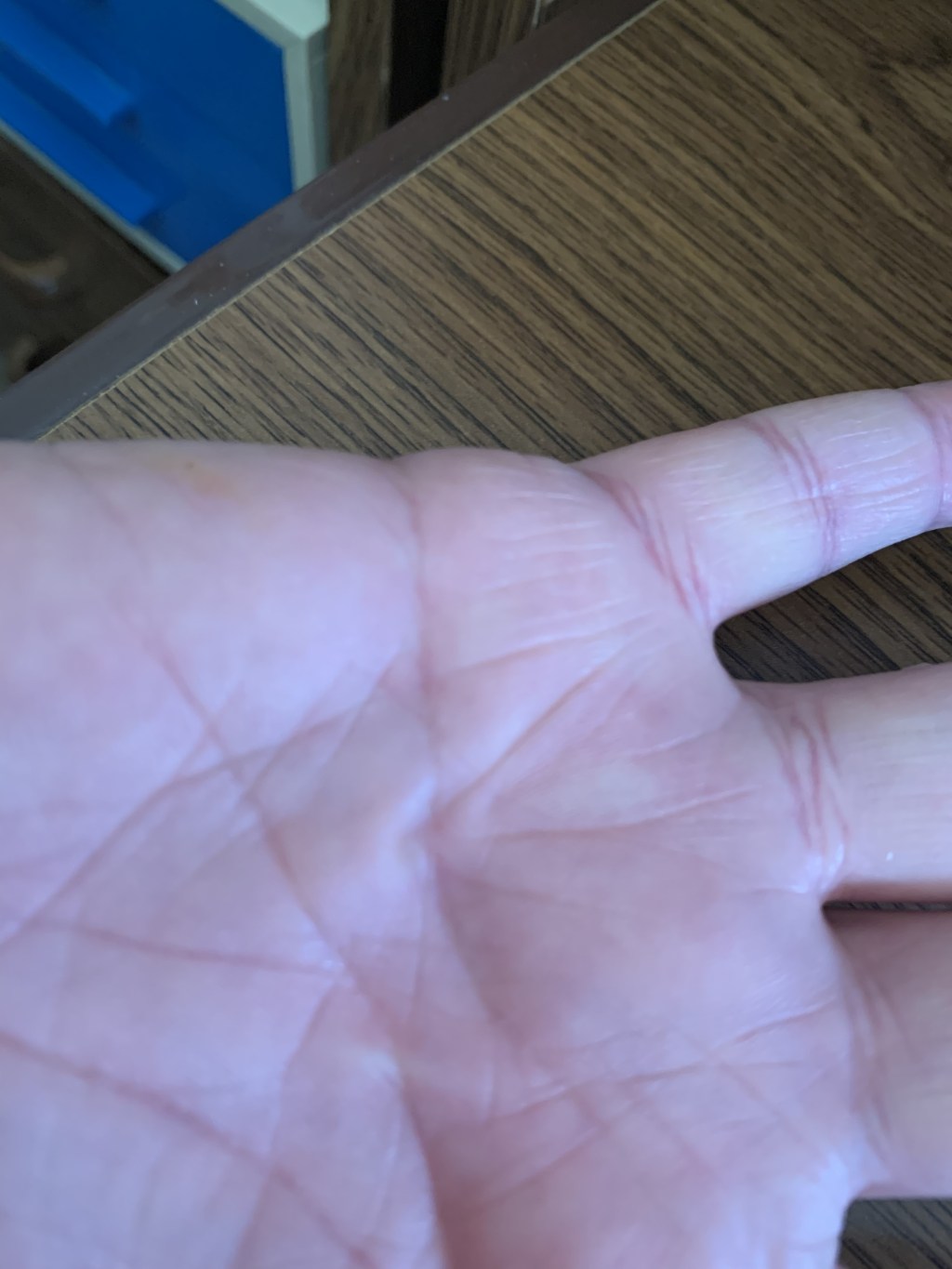
Dupuytren’s contracture is a condition affecting the connective tissue beneath the skin of the palm. Over time, this tissue can thicken and form nodules and cords that gradually pull one or more fingers into a bent position. The ring and small fingers are most commonly affected, although any finger can become involved.
Risk Factors
The exact cause of Dupuytren’s contracture remains unclear, but genetics appear to play a significant role. Many individuals with the condition have a family history of Dupuytren’s disease, suggesting an inherited predisposition. It’s been thought to be more associated with people who of northern european descent and has been called the “Viking Disease.”
However, genetics alone do not determine whether someone will develop the condition. Age, sex, ancestry, and certain health and lifestyle factors may also influence an individual’s risk and the rate at which the disease progresses. As a hand therapist, I have seen the condition present following a traumatic to the hand, complicating recovery.
Early Signs and Progression
The condition often begins subtly. Individuals may first notice a small lump or nodule in the palm that is not painful but feels firm to the touch. As the disease progresses, cords may develop beneath the skin, causing increasing difficulty straightening the fingers. It may affect one or more fingers, but the ring finger is the most common. It rarely affects the thumb.
One of the emotionally frustrating aspects of Dupuytren’s contracture is that progression is highly variable. Some individuals experience very slow changes over many years with minimal functional limitations. Others may experience more rapid progression, resulting in significant finger contractures and difficulty performing daily activities such as placing the hand in a pocket, shaking hands, wearing gloves, or grasping larger objects.
When to Seek Medical Evaluation
Anyone who notices nodules, thickened tissue, or increasing difficulty straightening their fingers should seek evaluation by an orthopedic hand surgeon. Early assessment can help determine the severity of the condition and whether intervention is appropriate. If intervention is warranted down the road, it can be nice to build a relationship with a trusted doctor.
For individuals who have already been diagnosed and are monitoring the condition, a simple screening tool known as the “tabletop test” can be helpful. To perform the test, place your hand flat on a table with the palm facing down. If you are unable to fully flatten your hand against the surface due to finger contracture, you want to seek reevaluation by a hand specialist. A positive tabletop test often indicates that the contracture has progressed to a point where treatment options should be discussed. Waiting too long can result in worsening hand function.
Unlike many musculoskeletal conditions, rehab alone cannot stop or reverse the underlying disease process. Occupational therapists can assist with problem solving adaptive methods for daily life functioning when hand stiffness is present. But exercises, stretching, splinting, massage, or other conservative interventions have not been shown eliminate the cords or prevent disease progression.
Medical and Surgical Treatment Options
Treatment recommendations are based on the severity of contracture, functional limitations, and rate of progression.
Needle Aponeurotomy
Needle aponeurotomy is a minimally invasive office-based procedure in which a physician uses a needle to divide the diseased cords beneath the skin. This allows the finger to be straightened with little downtime and a relatively quick recovery. While recovery is often faster than traditional surgery, recurrence rates can be higher because the diseased tissue remains in place.
Xiaflex® Injection
Xiaflex® (collagenase clostridium histolyticum) is an injectable medication that works by weakening the collagen within the Dupuytren’s cord. After the injection, the physician performs a manipulation procedure to rupture the cord and improve finger extension. This treatment avoids surgical incisions and may be appropriate for selected patients, although recurrence remains possible.
Palmar Fasciectomy (Palmar Fasciotomy)
For more advanced cases, surgical intervention may be recommended. A palmar fasciectomy involves removing portions of the diseased fascia responsible for the contracture. This procedure typically provides greater correction for severe deformities but requires a longer recovery period and postoperative rehabilitation.
The Role of Occupational Therapy After Treatment
Although occupational therapy cannot cure Dupuytren’s contracture through conservative management alone, therapy often plays an important role following surgical or procedural intervention.
Postoperative occupational therapy may include:
• Fabrication of custom orthoses to help maintain finger extension during healing. These are important in the early stages of healing and used at night for a period of time.
• Edema management techniques to reduce swelling that is expected after the procedure
• Scar management to improve tissue mobility and reduce adhesions to allow skin, muscle, tendon and fascia to glide
• Range of motion exercises to restore finger mobility which can take some time if a contracture was present for a long time
• Progressive strengthening activities when appropriate and prescribing an intensity to avoid undue inflammation while healing
• Education regarding home exercise programs and protection of healing tissues. We help with a balance between hand use and rest to optimize tissue recovery while improving confidence to use the hand.
• Functional retraining to improve participation in daily activities, work tasks, and recreational pursuits
Patients often benefit from working with a Certified Hand Therapist (CHT), an occupational therapist with has advanced clinical experience and specialty certification in the treatment of hand and upper extremity conditions.
CHT’s are uniquely trained to manage postoperative recovery following Dupuytren’s procedures, including orthosis fabrication, scar management, edema control, and restoration of hand function. The primary goals of hand therapy following treatment are to maximize hand function, preserve surgical correction, improve mobility, reduce your pain, learn to balance work with rest, improve your confidence and support a safe return to meaningful activities.
If you are preparing for a Dupuytren’s procedure or recovering after surgery, working with an experienced hand therapist can help you achieve the best possible outcome.
Is it Dupuytren’s? If you have noticed nodules in your palm, have difficulty straightening your fingers, or can no longer place your hand flat on a tabletop, an evaluation with a hand surgeon is recommended.
Should a procedure become necessary, postoperative rehabilitation with a CHT plays a critical role in restoring motion, managing scar tissue, and maximizing functional outcomes.
At Katherine Jackson Occupational Therapy, PLLC in Evanston, Illinois, we provide skilled, compassionate, and individualized hand therapy services to achieve the best possible recovery following treatment for Dupuytren’s contracture.
Our goal is to help each client restore function, maximize independence, and return to the activities that matter most. Contact us at the link below to learn how specialized postoperative hand therapy can support your recovery

